
L.S. Lewis, After The Vampire
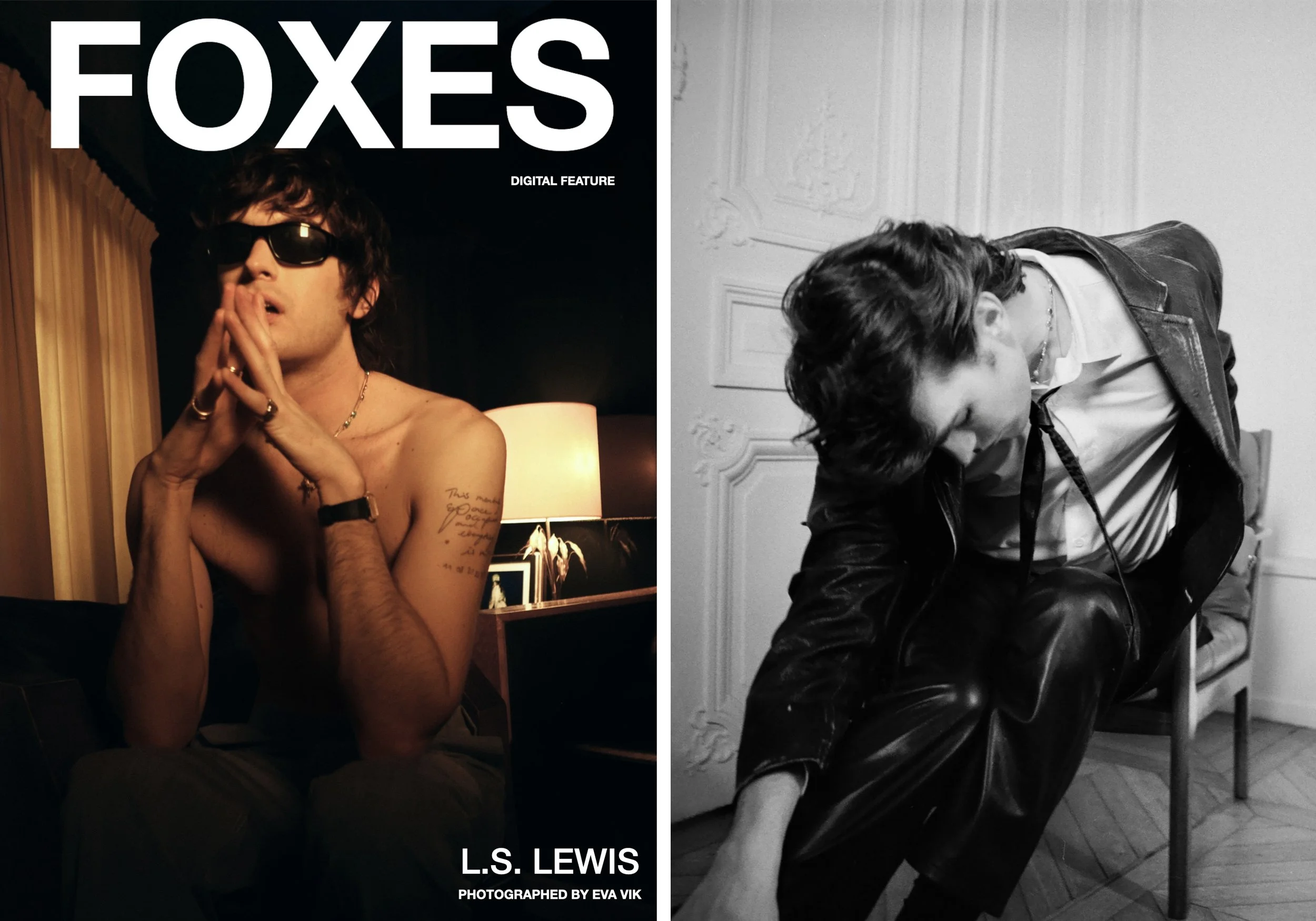
Talent – Lorenzo Sutto Lewis
Photography & Direction – Eva Vik
Styling – Marine Braunschvig
Trading dark suits for faded denim and dystopian dancefloor beats for the sincerity of an acoustic guitar, Lorenzo Sutto Lewis's new skin is still a celebration of an old ceremony.
Leaving behind the after-hours mythology of European Vampire, the French-Italian model and songwriter embraces a more intimate but equally truthful form of storytelling. After a decade spent building characters and carefully imagined worlds, L.S. Lewis has discovered that the boldest thing he can do is speak in his own voice.
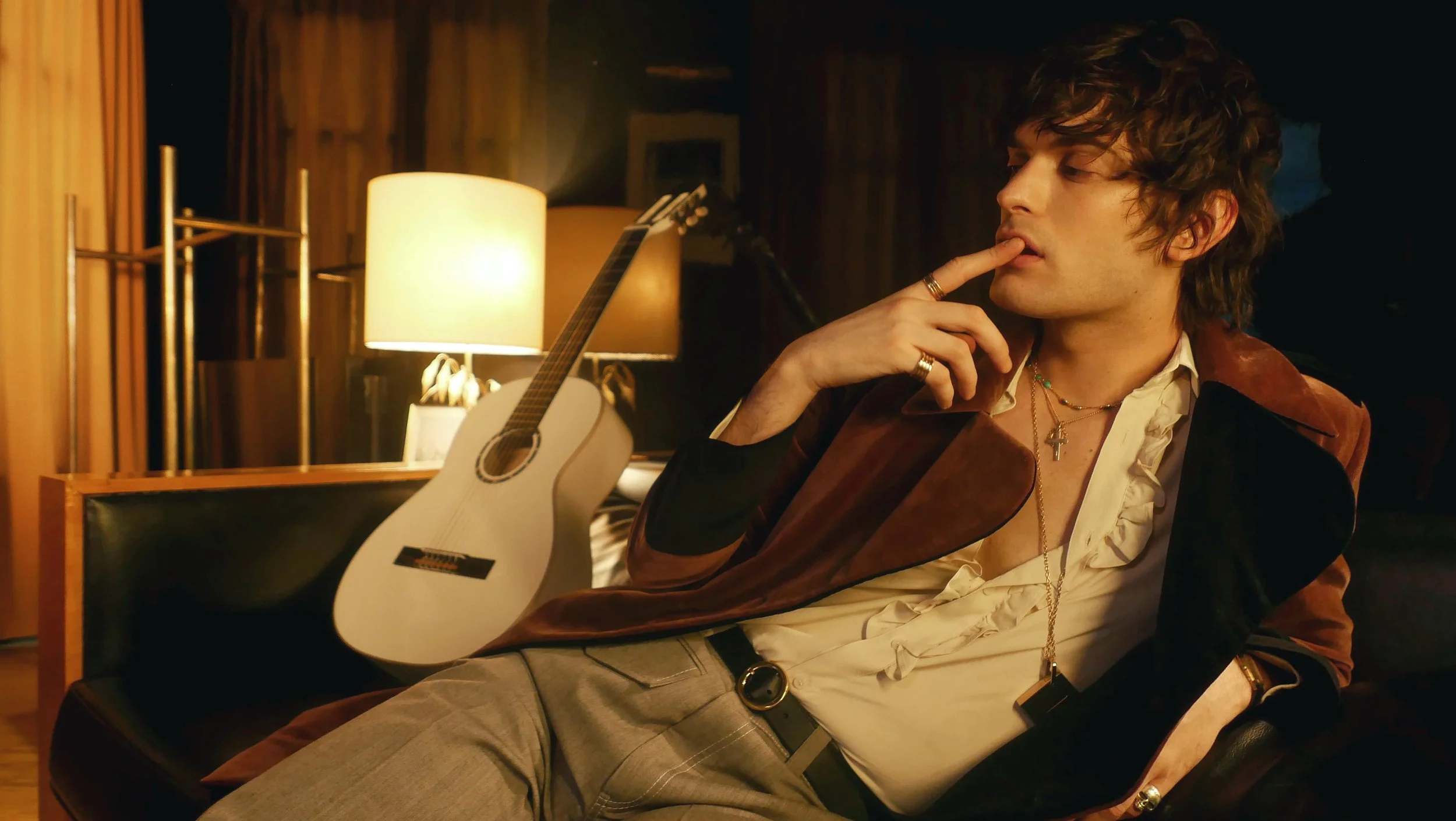
Jacket: Le Garage by Paul & Joe, Shirt: Vintage, Pants: Marni, Necklace: Dupont
Words by Lorenzo Ottone
A few months ago, in one of those Parisian bars where entry seems contingent on dressing slim and in black, and from which you emerge at dawn smelling of cigarette smoke for the rest of the month, Lorenzo Sutto Lewis – model, singer-songwriter and aspiring rock star – seemed almost defeated. Tall and lean, with the square jaw of a fotoromanzo heart-throb and striking blue eyes, he looked every inch the beautiful boy of fashion mythology. Just like you’d imagine the unique mix of Mediterranean flair and the neat traits of the great-grandson of a US official stationed in Paris during WWII. His hair was long and wavy, and he was wearing a Christiane F. T-shirt purchased from Noir Kennedy. He admitted he’d paid rather a lot for it – certainly more than one would for the usual film-poster tee that has shaped generations of adolescent-rebel clichés – but he’d bought it to support the shop itself: one of those places that helped define a certain way of dressing rock’n’roll decadence long before ‘Hedi boy’ became yet another TikTok tag.
And yet he didn’t look intimidating, nor did he embody the carefully cultivated misery of an underground poster boy. For one thing, his teeth were healthy and his boots reasonably tidy. He also smelled very good. He gesticulated as he spoke, moving his arms with the enthusiasm and spontaneity of a child who had grown up too quickly and perhaps spent too long disguising an adulthood that had not yet fully arrived behind designer’s clothes, fashion campaigns and nightlife.
“Lorè, look! I’ve still got all my hair. I have to keep being a rock star,” he joked with the caustic exuberance of a Pasolini ragazzo di vita. Though, there was a deeper melancholy beneath the laugh. That evening, Lorenzo had not yet turned thirty, and his new musical alter ego, L.S. Lewis, had yet to make its debut. Perhaps what weighed on him was the feeling of having done everything right, and yet having gathered far too few rewards from it.
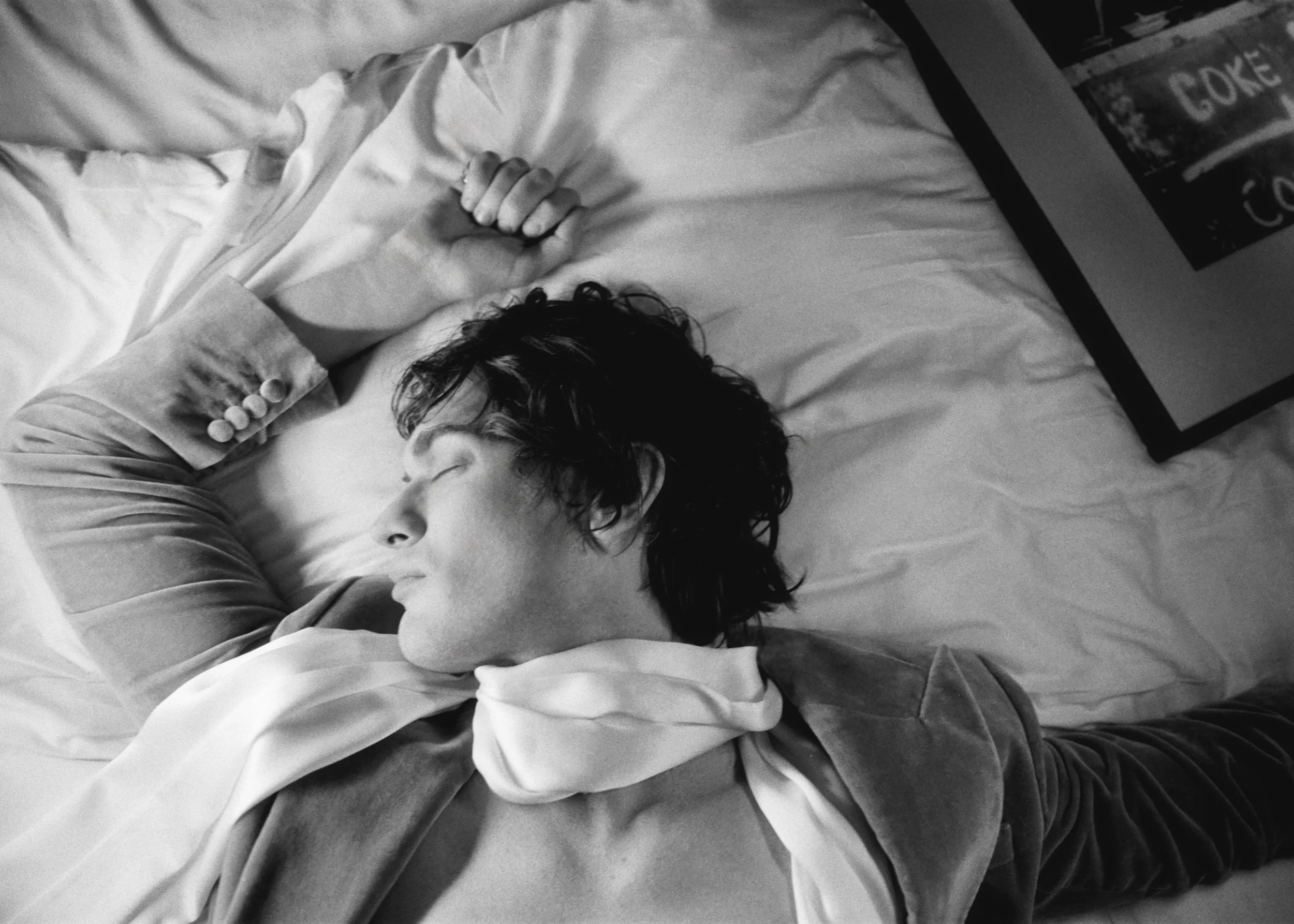
Full look: DIOR
Born in Rome in 1995, Lorenzo grew up – like so many boys and girls of his generation – in thrall to the myth of indie rock, even as that world had already largely disappeared, another symptom of Italy’s chronic delay in catching up with youth scenes abroad. In 2014, still a teenager, he flew to London without his parents’ knowledge to attend an Arctic Monkeys concert in Hyde Park. There he was scouted and began a modelling career, which unfolded hand in hand with the high hopes and biker jackets of his first band Red Bricks Foundation.
The industry was not yet ready. Few people still seemed interested in guitars, and by the time Måneskin stepped up out of the blue to collect the glory, Red Bricks already appeared close to falling apart. Towards the end of the 2010s, Lorenzo released a handful of poignant, King Krule-style, solo tracks on SoundCloud, which inexplicably never received an official release.
Then came European Vampire: an alter ego that was also a collective, formed with producer Mark Ceiling and another model – a genuine Hedi boy for Saint Laurent – Angus Spike McGuinness, formerly of Digital Endless Birthdays. Once again, Lorenzo was ahead of his time. European Vampire wore dark suits and narrow ties, singing about the hedonism of the night over electronic beats at least a couple of years before the rise of The Dare and the wider audience could accept again the neo-mod glamour of suits à-la Marcello Mastroianni and Robert Longo’s Men in Cities within a club setting.
There comes a point in every musician's life when the mythology they've built around themselves starts to feel a little too comfortable. For Lorenzo, that moment arrived with nothing more elaborate than a classical guitar found at his grandmother's house. It's the instrument that shaped Black, the forthcoming single from his latest musical incarnation, L.S. Lewis.
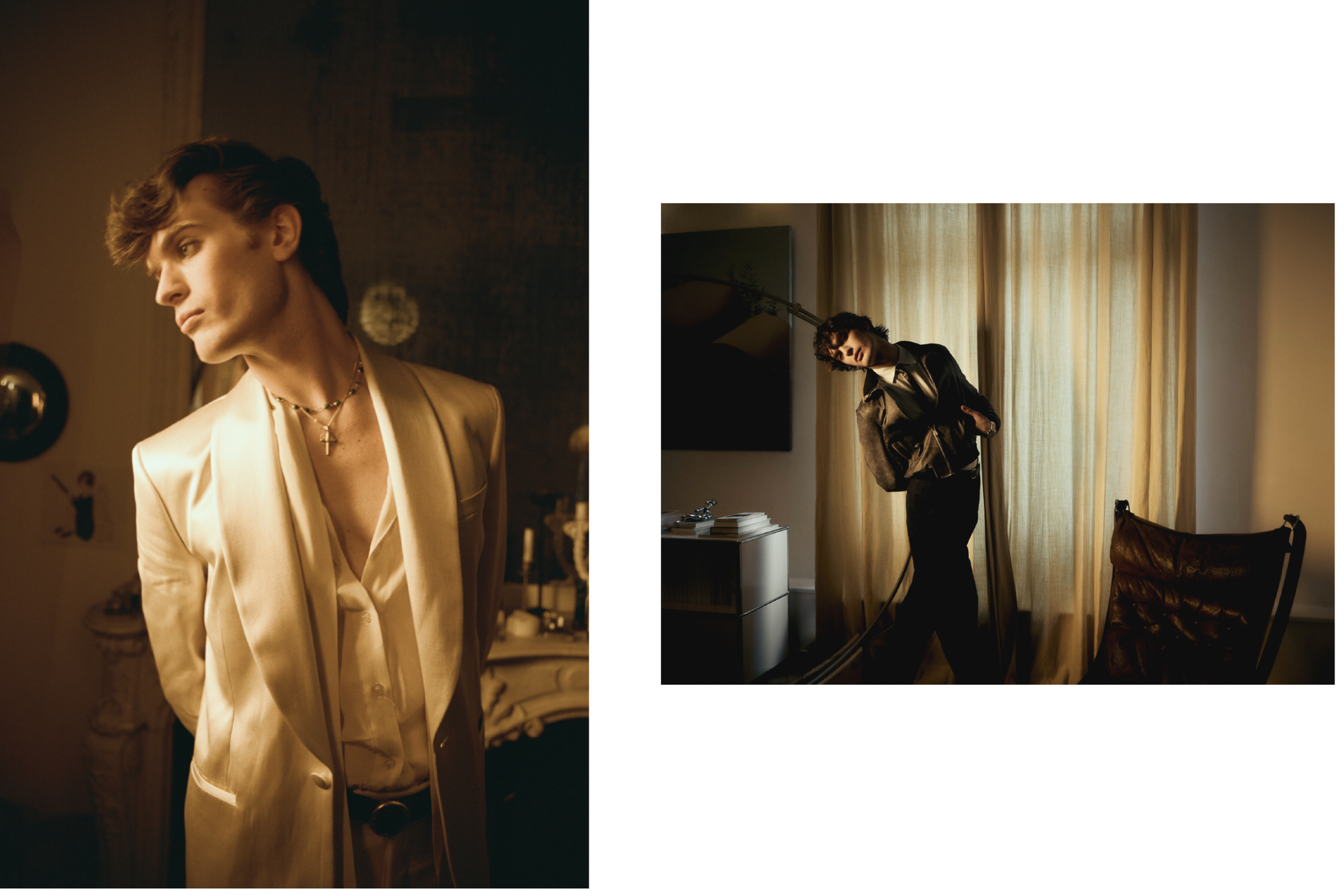
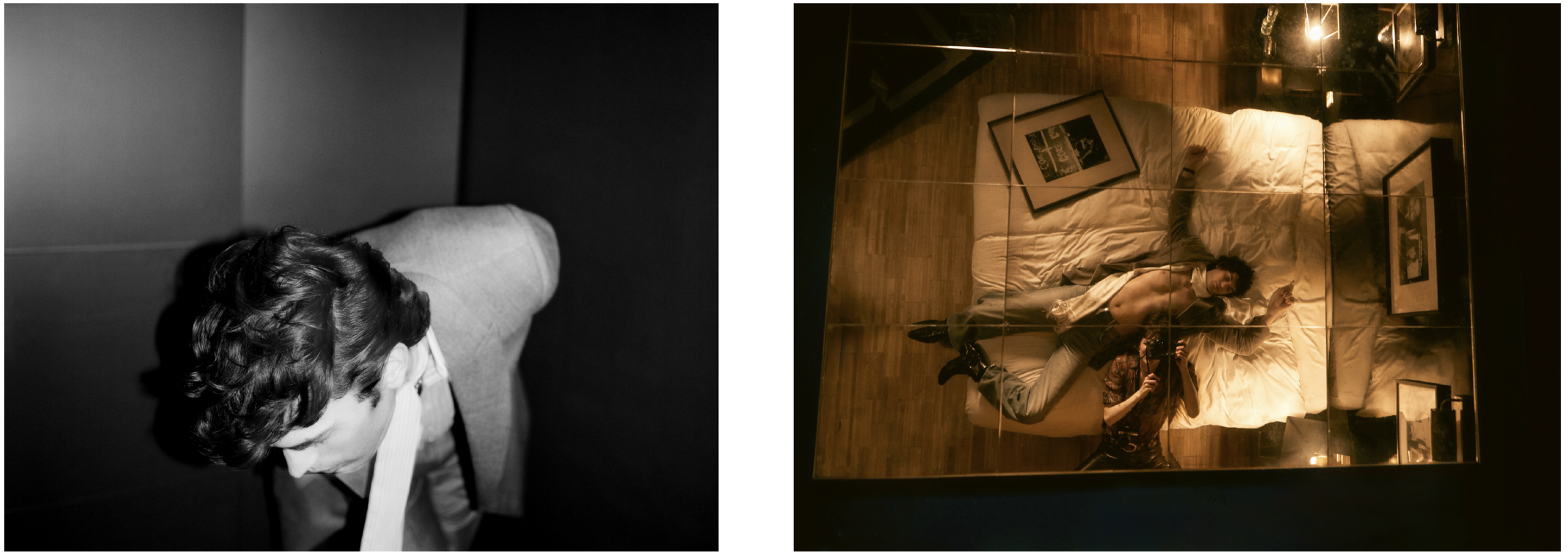
LEFT: Jacket: the Kooples, Pants: le Garage by Paul & Joe, Shirt, belt and boots: Vintage
RIGHT: Full look: Louis Vuitton
Even the cover, shot by Francis Delacroix, seems to hint at shedding one's skin. Against a blinding white backdrop lies the charred shell of a black Mercedes 300SL. It's as though European Vampire finally crashed at full speed somewhere in his journey at the end of the night. Speaking of Célines.
We catch up with Lorenzo over the phone from Monte San Savino, a postcard-perfect little town tucked away in the rolling hills of Tuscany's Valdichiana. He's there writing his debut solo album at the family house of roman producer Nicola Picchi (aka Loudplace+\) while, in the village square, a comedian in a red sequinned shirt entertains – with mixed results – an audience of pensioners and children from a makeshift fête stage, wearing wigs and impersonating a string of Italian pop stars, among them Pupo, remembered as much for his gambling addiction and polyamorous love life as for his Eighties hit Gelato al cioccolato.
Unlike illustrious indie-rockers-turned-haunted-crooners such as Nick Cave or Father John Misty, however, the Vampire does things differently. Gone are the dagger collars and razor-sharp pinstripe suits, replaced by battered bootcut denim and threadbare band T-shirts. The hair, true to his earlier promise, still falls thick across his forehead rather than being slicked back. It's as though the intimacy of this new project no longer requires the validation of a tailored suit. Stripping away the costume, getting straight to the point – to the heart of things – has become L.S. Lewis's strongest armour.
LEFT: Suit: Frame, Shirt: The Kooples, Belt and scarf: vintage
RIGHT: Full look: DIOR
On paper, L.S. Lewis looks like a clean break. The synths and nocturnal glamour of European Vampire have given way to acoustic guitars, quieter arrangements and songs that linger somewhere between the warmth of folk, the introspection of indie rock and the lyricism of the American singer-songwriter tradition. But Sutto Lewis is quick to reject the idea of a reinvention. If anything, this is less about becoming someone new than returning to where everything began. It’s a new skin for the old ceremony.
“I needed to go back to the source of what my first medium of writing music was,” he says. “Coming from indie rock, that meant a classical guitar played as an acoustic one. I wrote Black at my grandmother's place in Bordeaux and I didn't have any other instruments besides her guitar, so that's why it became the main instrument."
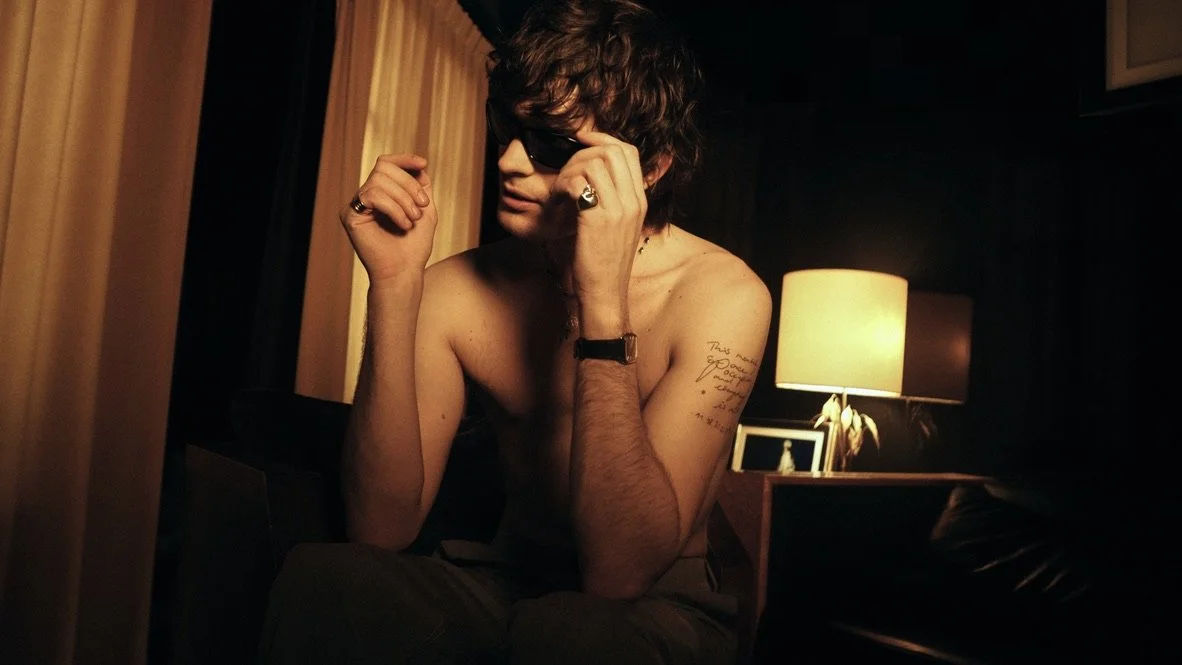
Pants: Marni, Sunglasses: Vintage
The references have shifted too. Elliott Smith replaces the dancefloor, Alice in Chains and Nirvana creep into the conversation where European Vampire once thrived under neon lights. Yet the emotional landscape feels surprisingly familiar. This is still music haunted by longing, only stripped of its costume.
The books he’s been recently reading – including Democracy by Joan Didion and Girls by Emma Cline (which he claims having lost somewhere in Turkey) – further suggest this intimate shift, and the growing influence of American pop culture – one also punctuated by the records of Johnny Cash, Jonathan Richman and Leonard Cohen.
It would be easy to read it as the oldest story in music: the énfant terrible grows up, turns the volume down and starts singing about himself, trading spectacle for sincerity. Yet, it’s not the case. Many of these songs have been waiting for him for years. Some were written almost a decade ago, long before the project itself existed, in between his multitude of music ventures.
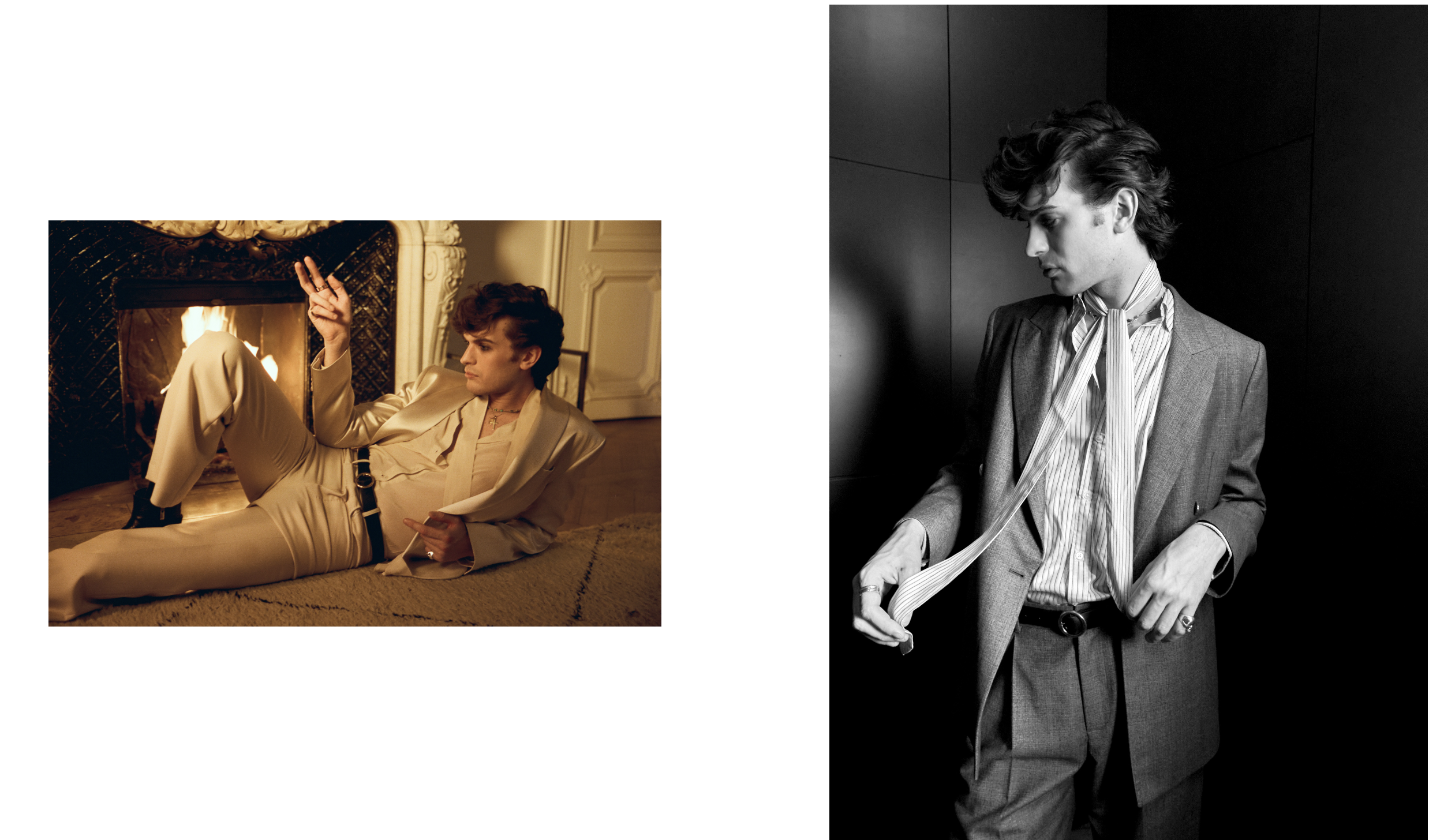
LEFT: Jacket: the Kooples, Pants: le Garage by Paul & Joe, Shirt, belt and boots: Vintage
RIGHT: Suit: Frame, Shirt: The Kooples, Belt and scarf: Vintage
“These songs have been in the vault of my own private heart and soul for more than ten years,” he says. “But they have a will of their own. They would find a way to come out of your system if they needed to. These recurring images aren't just a product of who I was as a teenager, they're still very much present in my life.”
Perhaps that's why L.S. Lewis doesn't feel nostalgic. These aren't old songs retrieved from a drawer, but songs that simply refused to disappear.
Asked whether the project marks a step towards maturity, Sutto hesitates. “‘Do I still feel young?' Fuck, that's a hard question," he laughs. "In some ways I really do, because I still get amazed by things I've never seen before. But when it comes to naivety and sheer happiness, I really don't.”
He pauses before quoting Nina Simone: “‘Some make it when they're young, before the world has done its dirty job.’ I guess I feel like that sometimes. This project has gained more maturity than the rest, maybe because I'm finally using my own name. But there's still a lot of time before I'd consider myself mature.”
Years ago, Sutto described European Vampire as an ‘anti-reality’: a fictional universe where desire, nightlife and European decadence blurred into something cinematic. L.S. Lewis feels quieter, more intimate, almost diaristic. Yet he insists both projects are equally truthful. Actually, believing that – despite appearances – one is the antithesis of the other is the biggest misconception about L.S. Lewis.
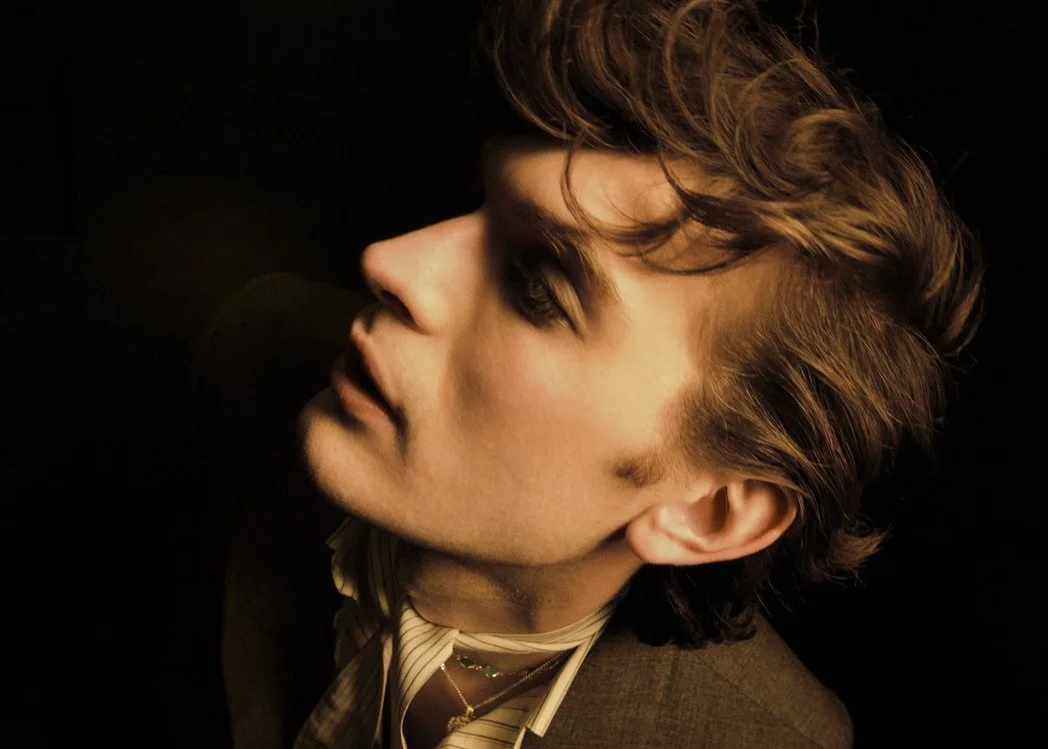
Suit: Frame, Shirt: The Kooples, Scarf: Vintage
“I think European Vampire is as real as it gets,” he says. “I've seen those images repeating over and over in my life. I've met people exactly like the ones described in those songs. Yet, L.S. Lewis is what comes after that particular night is gone. You're left with a hole in your wallet and a hole in your head, trying to make sense of what happened. That feeling of being lost, that feeling of dread or fear... it's human. It makes more sense when it's addressed quietly, in first person, when you can look it in the eyes and say, ‘Now I see you, and now we can talk.’”
Vampires, though, are hard to kill. He's simply changed clothes. “I feel like the vampiric figure is still there,” Sutto says. “Only he's not wearing a suit anymore. He's just suffering – as a human condition. Maybe the night is still there too, just without the neon lights or the expensive cars. Maybe it's just the residue of rain on the cobblestone somewhere in Paris on a November night, or maybe it’s in the back of a black cab in London, while your girlfriend is waiting for you with a half smoked cigarette and a tear ready to drop on the back of her eyes. Or, eventually, it’s just because I can’t sleep at night and that’s when I write without feeling bad about the rest of the things I should be doing during the day.”
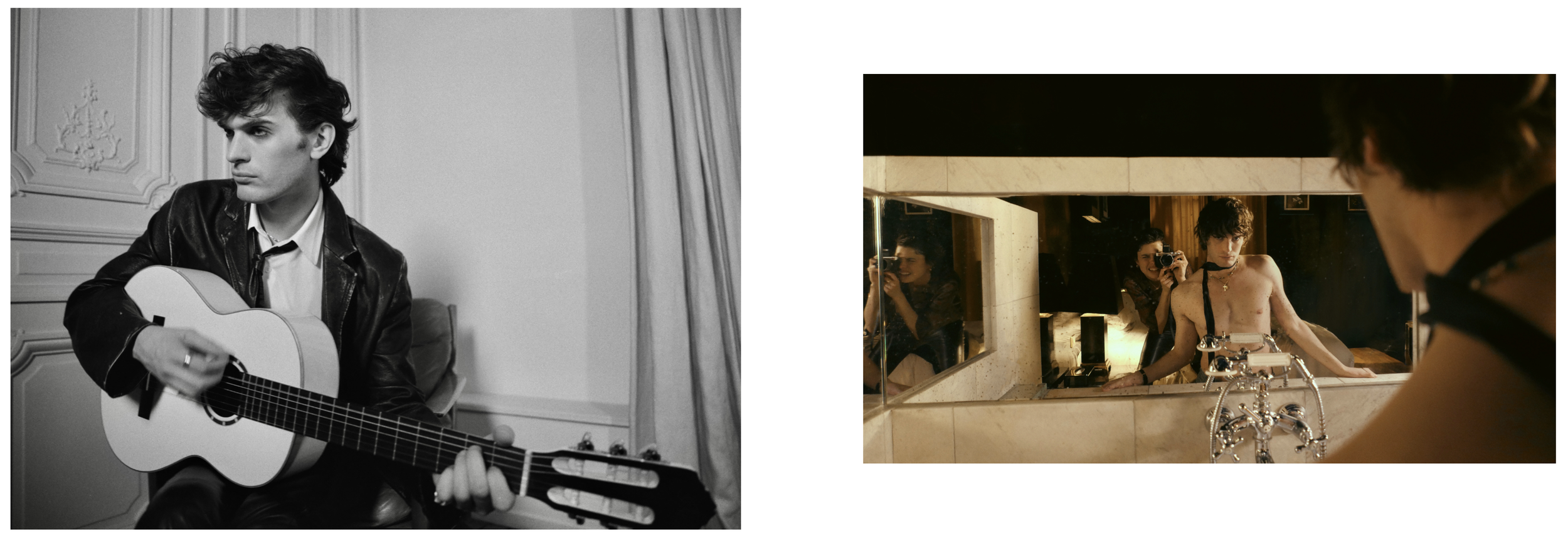
LEFT: Jacket: MM6, Shirt: The Kooples, Pants: Zadig and Voltaire, Tie: Vintage
When he speaks, Lorenzo is animated by flashes of genuine candour. There is nothing calculated about his devotion to music. The Adonis physique, the alleged superficiality of the fashion industry over the art for art’ sake of music, the fact that nowadays being a model also means being, to some extent, an influencer inevitably invite assumptions. And yet the music always comes first. Like the night we spent talking about Italian lawyer turned troubadour Paolo Conte until dawn on the rooftop of a painter's studio in Venice.
The cinematic worlds conjured by Conte, echo in Sutto’s research for detailed sketches of reality. Something perhaps unsurprising for someone whose life has long unfolded somewhere between music and fashion. Sutto speaks about both industries with unusual clarity. “Modelling taught me what it feels like to just look the part without first being the part,” he says. "But it also allowed me to sustain a career in music that I wouldn't have been able to pursue otherwise. It gave me courage and drive, teaching me more about life on the road than touring itself. Try surviving a whole fashion month through London, Milan and Paris when you're nineteen, fresh out of school, surrounded by a bunch of kids who are just as clueless and scared as you are."
There are the expectations, the fear of failure lurking around every corner, and, as he puts it, the constant search “to be validated by the external giant eye of your internal judgement, with no money, no jobs and no Internet connection.” One could argue there are greater worries in life. But one should also appreciate the disarming honesty with which Sutto admits them.
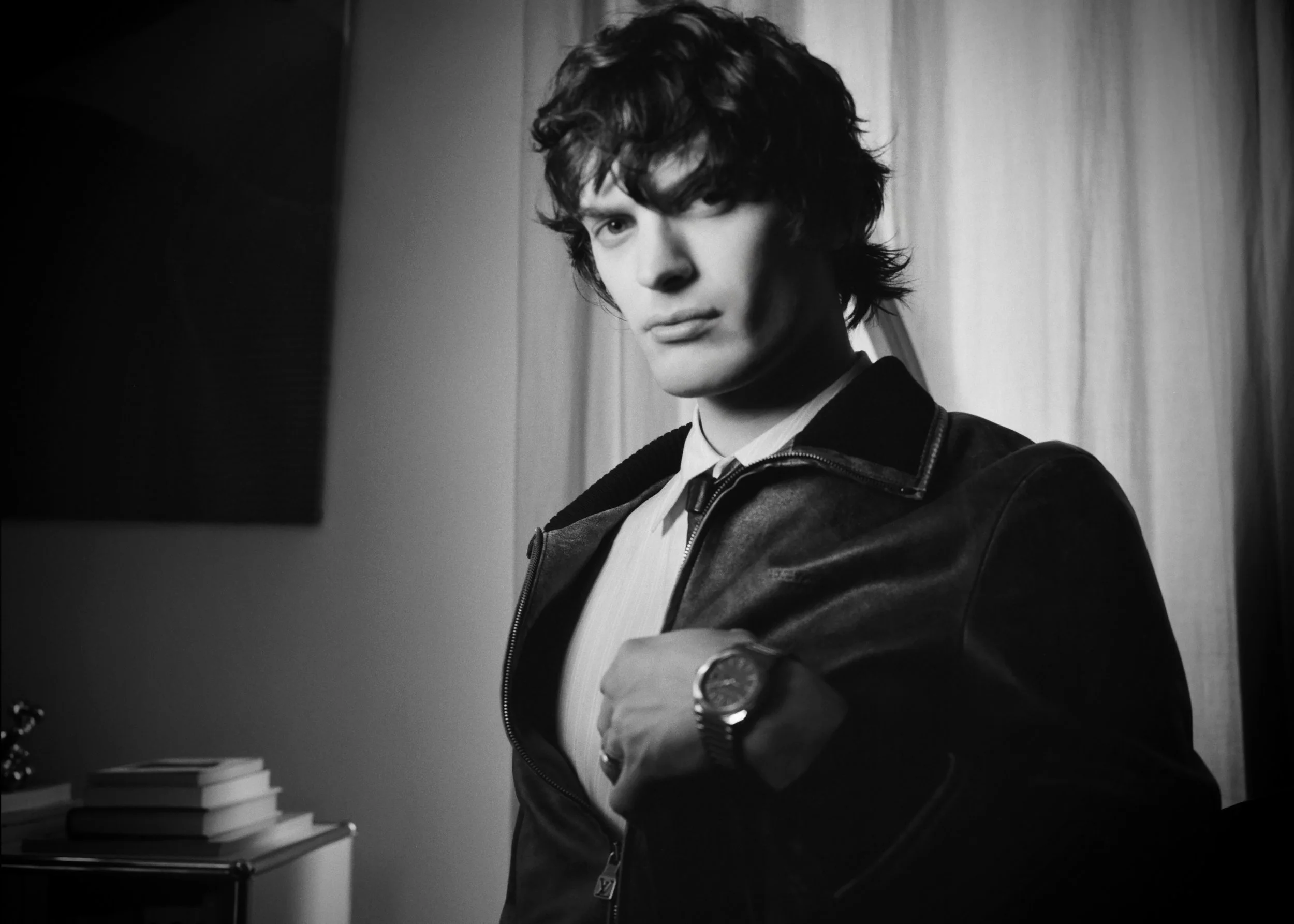
Full look: Louis Vuitton
Watch: Bvlgari
Perhaps that's what L.S. Lewis ultimately represents: not an escape from performance, but a different understanding of it. Standing on stage with little more than a guitar has become, paradoxically, the most liberating experience of his career.
“It feels so refreshing to be able to stand on stage by myself with just a microphone and a guitar and be the sole responsible for the show.”
Fate, meanwhile, seems determined to keep playing tricks on him: gifted with the physique du rôle of a model and yet too tall for the runways. After all, it’s something that seems to be running in the family blood. Like his American great-grandfather, who fell on the day of the liberation of Paris. Perhaps, L.S. Lewis is eventually arriving at the right time.
Like Curzio Malaparte noted in his novel La pelle, set in Naples at the tail end of WWII, all American servicemen, with their squared jaws and countrymen eyes, were ‘good guys’, bearers of intrinsic innocence – no matter what they did. That must run in the family blood.
By the end of our conversation, the question of innocence – which quietly hovers over the entire songbook – hence keeps resurfacing. Does he still feel innocent?
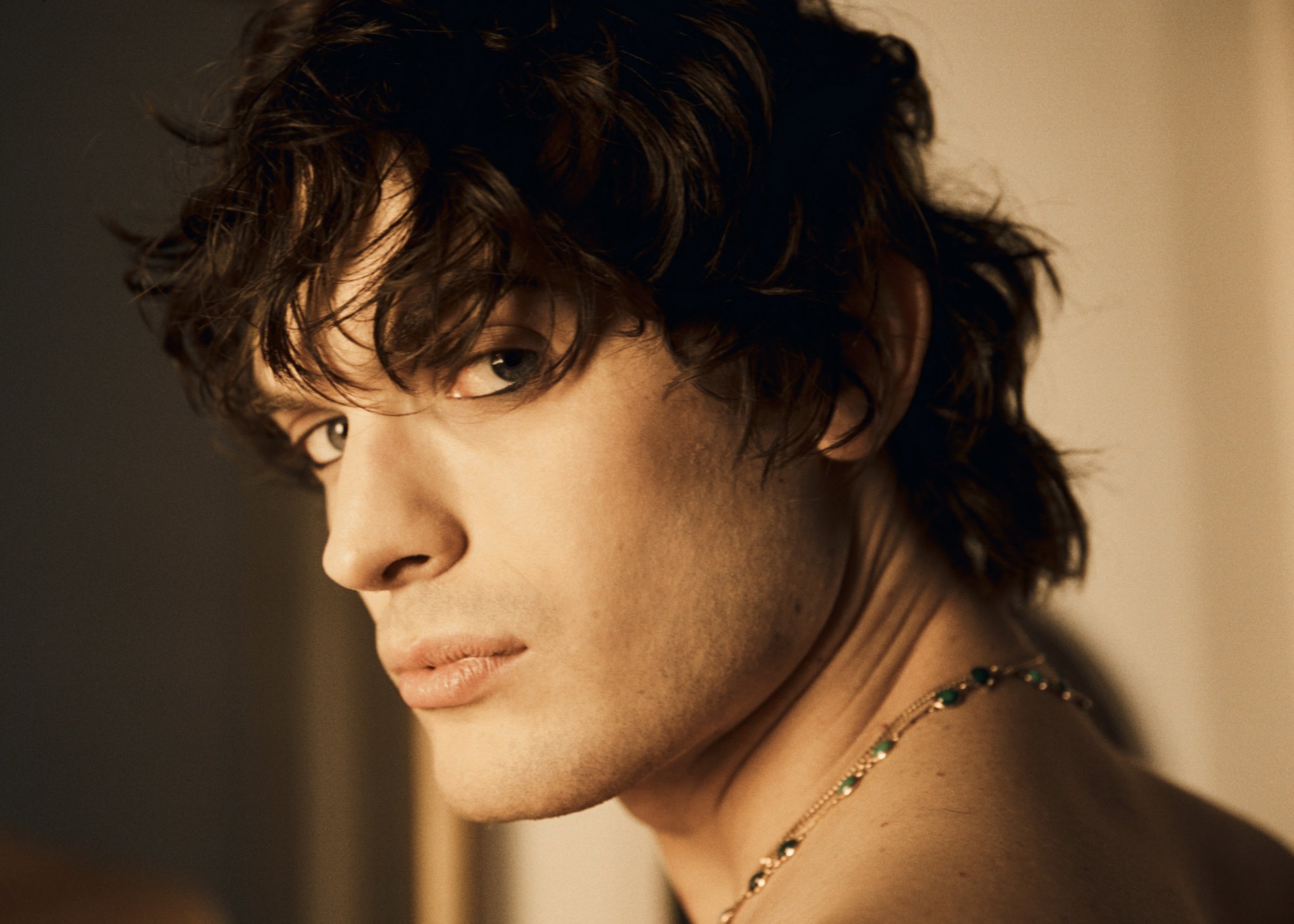
“Self-knowledge is the key to understanding,” Sutto replies. “And understanding takes away all the magic of living. So no, I don't think I'm that innocent anymore. My internal guilt has fossilised and become amber for everyone to see... yet I'm bound to be motionless, stuck in uncertainty between being a good person or a bad one. Or whatever man I wish I was – I don't think I am.”
Some words suggest that Lorenzo feels torn inside, wrecked at times, but nonetheless equipped with unwavering hope.
Which of his two professions proves more successful with women — modelling or rock'n'roll? It's probably the question we're all secretly hoping he'll answer. Lorenzo laughs and says he genuinely wouldn't know.
Perhaps the vampire has become an angel. Hardly. But he isn't playing a part anymore. And in an industry where almost everyone is, that might just be another way of saying that L.S. Lewis, after all, is still innocent.
“Black”, the new single by L.S. Lewis is out now on all digital platforms.
Photography & Direction – Eva Vik (@evavik.official)
Talent – Lorenzo Sutto Lewis (@lorenzosuttolewis)
Styling – Marine Braunschvig (@marinebraunschvig)
Styling Assistant – Margaux Lesgui (@margauxlesgui)
Hair – Marlene Bouron (@marlenebouron)
Makeup – Elise Sikula (@elise.sikula)
Photography Assistant – Aljaz Babnik (@aljazbabnik)
Photography Assistant 2 – Mathias Baronn (@mathiasbaronn)
Production – The United Freaks (@theunitedfreaks)
Post Production – Cian May (@cian_may)