
Trying to save Rocknroll in NYC! One person at a time/ Lipps Service Live- Scott Lipps

Photos Alex Hall, Clothes by The Cast and Chuck Bones
Words by Marisa Whitaker @whitakermarisa
Locations: @96tears, thanks to @Jessemalin, @jonathantoubin and @glassinebox
If there’s one thing you can count on when hanging out with Scott Lipps, it’s that someone will stop to say hello. In both NYC and LA, Scott is the man on the street, the man around town, and the man behind and host of Lipps Service podcast, one of music’s biggest and most involved shows since 2018.
Scott’s lifelong passion for music goes way back to when he moved cross-country from Long Island to Los Angeles to live out his teenage dream of being a rock and roll drummer. He found himself thrown into the wild glory days of Sunset Strip, and played with the band Black Cherry in the same scene that birthed Guns N’ Roses and Jane’s Addiction. The band didn’t make it to the big leagues, but Scott’s hustle never wavered. As the music slowed down, a cousin in the modeling industry opened another door, and Scott walked right through it.
That move led to the creation of One Management, which became one of the top talent agencies in the business. But even with years spent managing some of the biggest names in fashion, Scott’s passion for music persisted. With some overlap during his time drumming for Courtney Love’s solo project, by 2018, at the beginning of the rise of podcasts, Scott launched Lipps Service. His podcast passion project was inspired by his many friends in both music and modeling who would tell him, “You know everyone. You should start a podcast.”
The self-taught interviewer has sat down with dozens of music legends, from early episodes with Anthony Kiedis and David Lee Roth to recent acclaimed chats with Julian Casablancas and Ian Astbury. Some, with the likes of The Warning and Andy Biersack of Black Veil Brides, have received wide praise from fandoms and industry heads alike. I came around in 2023, when I met Scott on the street—a fitting tale for both Scott and NYC—and have been helping produce and book the podcast ever since.
This year, Lipps Service has evolved beyond the studio and onto the stage. Being one of the only music podcasters to expand the platform in such a way, Scott first executed the idea to do a live show this June at the historic West Village venue, The Bitter End. Bridging the gap between up-and-coming and legendary New York music, we booked the locally applauded inaugural Lipps Service Live! show, which hosted performances by Ed Kowalczyk of Live, Hamilton Leithauser of The Walkmen, Eugene Hutz of Gogol Bordello and the Casa Gogol All-Stars, Telescreens, Thesaurus Rex, and Torture and The Desert Spiders.
Less than two months later, the opportunity arose to host a bi-weekly concert series at the renowned live music venue in downtown Manhattan, Silver Lining Lounge. Since mid-July, Lipps Service has programmed shows every Wednesday and Thursday, including a stand-out, highly publicized show with Sublime, Des Rocs, Beauty School Dropout, Winona Fighter, The Molotovs, Simon Neil of Biffy Clyro, Nova Twins, and upcoming shows in November with music icons Train and Gym Class Heroes.
Alongside uplifting some of music’s biggest artists through the concert series and podcast, Lipps Service has given a platform to young and rising local NYC musicians. Various nights of the concert series have included stacked bills with some of the city’s brightest starlets, such as Telescreens, Cab Ellis, Audrey McGraw, Promiseland, Alexa Dark, Native Sun,10xtantrum and Skorts. And podcast episodes with The Thing, Jackson Hamm and the Telescreens and Sid Simons have provided these buzzing rock stars the opportunity to share their stories with Scott’s wide-ranging audience.
As one of the leading music podcaster players, Scott and Lipps Service is an evolving force. It’s safe to say that Lipps Service is always happy to hop on a call, grab a coffee, and have a conversation about collaborating on the like-minded effort of getting musicians’ voices heard.
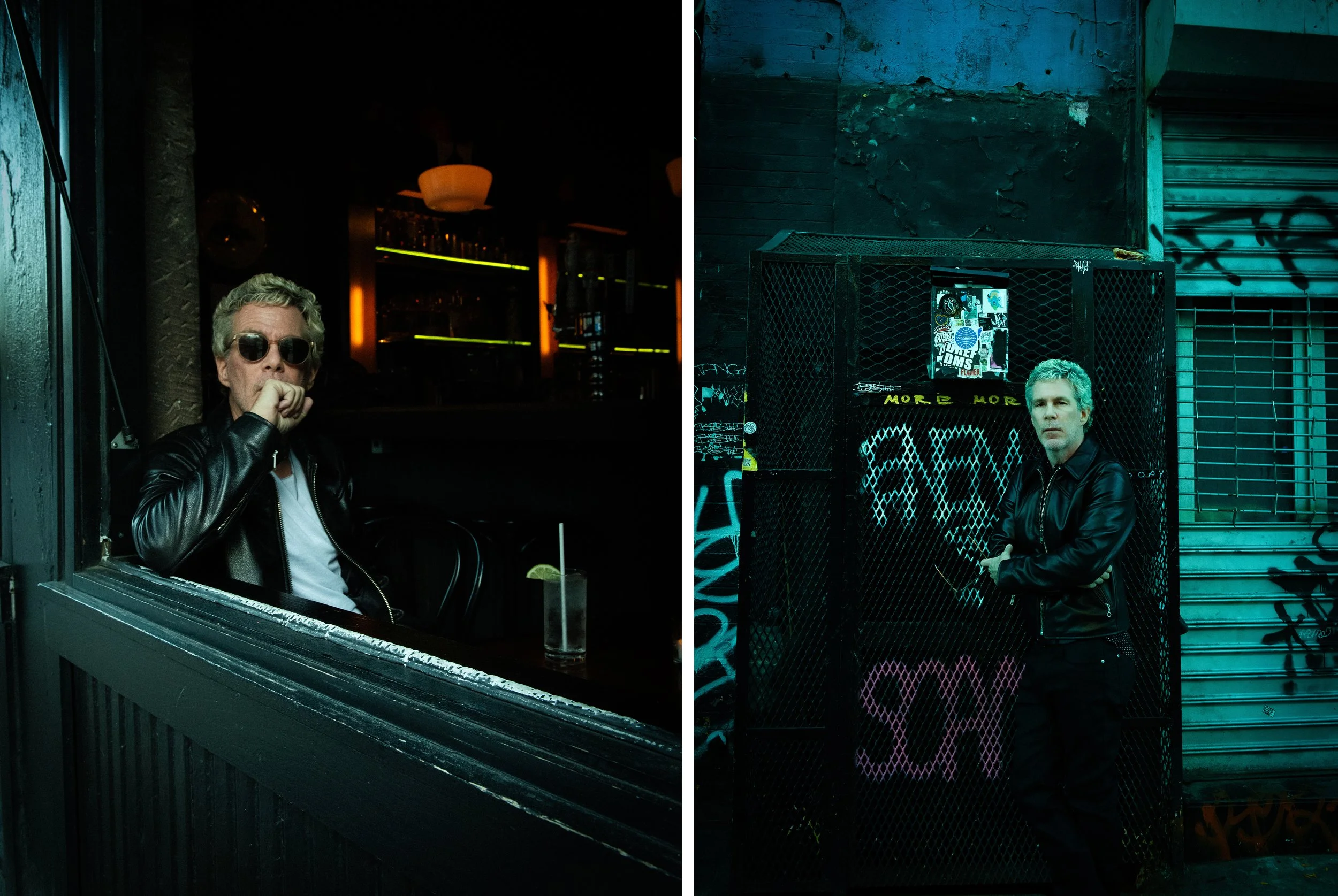
Marisa Whitaker: How do you feel about where you're at right now? What are you all doing?
Scott Lipps: I don't feel like there are a lot of people in New York who are trying to do something very unique and interesting in terms of the music scene. I mean, there are still seven to ten clubs. I just don't think anyone's really trying to do something incredibly different at this point. The idea of bridging the gap between iconic bands and the “underplay” thing, which is super big right now—you have Metallica doing gigs in the Hamptons and Gwen Stefani doing underplays—and getting involved in that to promote music is super interesting, because everyone's looking for alternative ways to promote music versus just playing at Terminal 5 or Bowery Ballroom these days. In terms of press, to have bands like Sublime, Live, Gym Class Heroes, and Train, and then cool up-and-coming bands like Telescreens and The Molotovs—bands that are really making a difference now in music, old and new—that’s interesting to do differently. People need a different approach to marketing music. Music has taken such a turn that people are discovering it in so many different ways now. It's not about going into your record store like we did many years ago, or listening to the radio. You have to find alternative ways to discover music, and if that's through a concert series, a podcast, an underplay, or by trying to do something different. Even the way The All-American Rejects did their last tour on college campuses—that’s an alternative means to what was “traditional” before.
MW: What is most important to you about uplifting up-and-coming bands?
SL: It's super inspiring and very cool. I don't think it was as vested in the New York scene a couple of years ago when I did a super deep dive. Through also working with you, too, I knew there were a hundred bands in New York, but I didn't know there were fifteen to twenty that I thought were outstanding. There have been bands that I've already helped bring record deals to, just by getting involved. Being part of that story is really interesting. I look at what's happening here. Back in the day, you had Hilly at CBGB’s. I don't think you can name ten people in New York who are integral to raising the profile of what's happening here. Back in the 2000s, when you had The Strokes, LCD Soundsystem, and Yeah Yeah Yeahs, there was an obvious scene. I don't know if that scene exists today like it did years ago, but we're probably one record, one single, or one movement away. Maybe this is the movement. Hopefully, it’s coming back. With artists like Yungblud, Palaye Royale, Måneskin, Amyl and the Sniffers, bands like Bad Nerves, which is a band I've always loved, there’s definitely a movement towards rock. I always tell people, if Yungblud is the gateway drug for young kids to rediscover rock, amazing. Whatever it takes—whoever that artist is that breaks it open—if it's Amyl and the Sniffers, Bad Nerves, whoever it may be—great. We just need that to happen, in my eyes.
MW: What is rock and roll to you?
SL: It's a movement. There was a movement when I was growing up. I played in a band that was Guns N’ Roses-adjacent, and it was like no other time period I think will ever exist in history. You had thousands of people waiting in line every weekend to get into clubs and venues on the Sunset Strip. I don't think that'll ever happen again because everything's been so fragmented. But it's a lifestyle. I live it, I breathe it. You live it, you breathe it. It's not something you really put away. I spent thirty years in the fashion business, although I've always been fifty percent music and rock, too. It's time for rock to really converge into one.
MW: Why is it important to you and your work to save rock and roll? What all are you trying to do to save it?
SL: There's a lot of great pop music out there, but I don't think a lot of it has that much soul. At the end of the day, it's all about songs. Rock and roll has always conveyed rebellion, spirit, and energy that, for me, was incredibly attractive. I feel bad that over the last twenty years, a lot of young kids didn't get to experience a real movement, because rock hasn't been the music at the forefront of people's minds. It's been country, hip-hop, pop, and K-pop—everything other than rock. There's not even a rock and roll category at the Grammys that gets televised. To me, that's sad. Just seeing the VMAs the other day with Aerosmith and Yungblud led me to believe that maybe it's coming back. Maybe the next halftime show might be Metallica, which is what they're talking about. I just miss it. I think a lot of people miss it. I think a lot of people want to see it return. It never went anywhere in terms of the live setting. You still have Oasis playing for sixty thousand people a weekend when they're doing stadiums now. So clearly, that didn't go away. Guns N’ Roses has been touring on a record they did twenty years ago, playing stadiums for the last ten years. There are a lot of rock and roll bands that sell more tickets than most people. Some of the biggest touring acts in the world—The Rolling Stones, for example—are rock and roll bands. Maybe they’re the second biggest touring act in the world, the first at some point. In the live setting, it never really went away. But in pop culture, we’re still in the shade. Maybe we can step back into the sun again.

MW: You've been doing the podcast now for seven years.
SL: You know that more than I do. It feels like ten years or two years. I wouldn't have known that unless you pointed it out.
MW: Why does it feel that way?
SL: I don't know. I started it many years ago. I knew a guy who was a principal at Dash Radio, which was sort of—I don't want to say the poor man’s Sirius—but it was another alternative to Sirius that started at the time. Kylie Jenner had a station. They were giving a lot of celebrity stations. They were like, “Oh, you play drums, you work with a lot of talent—you should try hosting a show.” I said, “I don't know how good I'd be at it, but sure, I'll try.” The truth is, like anything, I don't think I was very good at it at first. I'm still learning. I'm still trying to get great at it. I think certain episodes are great; certain episodes are not as good. You're only as good as your guests sometimes, and the energy they bring you. Randy Jackson, I think, was my second guest, and he's great. Randy's a natural. He's had his own radio shows, obviously American Idol, and he and I are friends. You could see our dynamic. I didn't really have to do much talking. He carried the whole thing. Thankfully, because of him—and I’ll give him credit—they wanted to pick it up because he was so charismatic. I probably hardly talked on that show because he's great at what he does. That's kind of how it began. When I listen back on some of the interviews, like the one with David Lee Roth, it was, in my eyes, a bit of a train wreck because he definitely steamrolled me in the conversation. I didn't know what was going on. But you live and you learn. You get better. You improve. Like I said, there are still episodes now that I feel incredible about and that I think are great, and there are episodes where people maybe aren't as warm or kind or don't give me that much energy. You're only as good as the energy you get from your guest.
MW: What is most important to you, then and now, about doing this—letting people talk about their careers, personal lives, professional lives, music, and art?
SL: All this stuff is storytelling. At the end of the day, it comes down to a one-minute clip half the time that you see on Instagram or TikTok—and it's storytelling. If you can get an incredible story that touches people in a minute and it goes viral, it's because it struck a chord. That's the one thing that really appeals to me about it, and working with people I admire and love and think are great. Just the other day, the podcast and I presented a show for The Cult. It’s a band that I have loved since I was little. That was incredible to get to work with them hand-in-hand on the show and the creative process. It's interesting to see how artists work when you don’t just know them as friends. I've managed bands when I was younger and got involved in other things like that, but this is a different era.
MW: You've been doing this podcast. We put together a show at The Bitter End, and now you're doing this concert series. You do live sessions. You're really expanding this small but growing Lipps Service empire that's reaching different platforms, mediums, and forms of communication. What is inspiring you to grow it? Being one of the few people, probably the only person out there doing all the things you're doing—what does it mean to you? You're a go-getter; you say yes to things. What does it mean for you to build and expand upon what started as just a podcast and now includes all this?
SL: It was you and also Natalie, my girlfriend, who both mentioned doing some kind of live show over the last couple of years. I always get a little bit nervous sitting in front of an audience. Still to this day, weirdly enough, I do a podcast, but I get nervous about public speaking. I never liked it. Even when we have seven people in the studio, it makes me nervous because I feel like everyone's judging every word you say, and I've been known to flub a few times. So I wasn't really thinking about doing it live. We did a proof of concept for a live podcast, and then it turned into this live, little music festival thing at The Bitter End with Live, and the best of New York with Telescreens, Gogol Bordello, and others. Again, I'm thinking, “What's the endgame for this?” It could also be a music festival. A bigger festival. Something different. We're working on creating something like a version of, I wouldn't say Tiny Desk, but an alternative to what's happening out there to promote music, where we have bands perform live in the studio. We’ve had Royel Otis, Simple Plan, Jordan Davis, and Culture Wars. Alternative ways to promote music are what interest me—whether it’s our version of live sessions in the studio, the concert series, or obviously the podcast. There are a million podcasts now, but not many rock and roll podcasts that people actually listen to and have traction. Who’s out there telling stories? Not a ton. There are probably five million podcasts, but not five million that tell the story of rock and roll and music in an incredible way. Not that mine is incredible, but I’m trying—and that’s important. And there are some incredible stories that come out of it from all the work we’ve done.
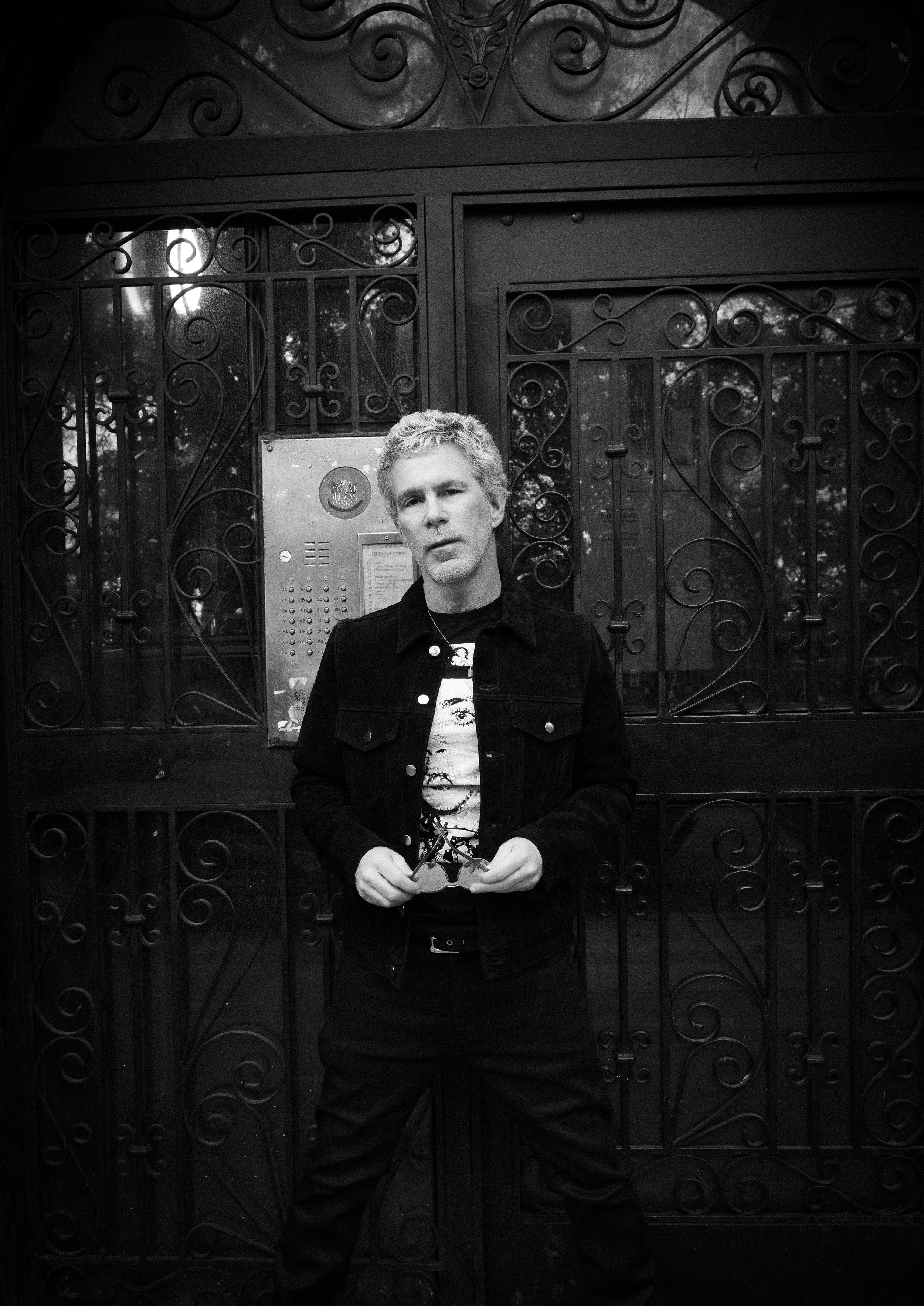
MW: I was talking to my brother about this the other day. He's super into music right now and showing me all these cool bands I've never heard of. I'm impressed with how he's discovering. But he doesn't love going to shows. And I was like, “Brother, live shows are where it's at!” It's such an experience—physical, emotional, visceral—being physically present. We know the plight of people not going to shows these days. It's super hard to sell tickets. You push through anyway, but it’s difficult to put on shows two nights a week in New York City, of all places. What does it mean to you to not only put on shows, but to uphold the importance of live music?
SL: There was an energy here for many years, back in the Rose Bar days. I did stuff with my buddy Nur Khan, where we had Guns N’ Roses, The Black Keys, Velvet Revolver, and all these bands playing for a hundred people, with an audience of Kate Moss, Mick Jagger, Lenny Kravitz, Bill Clinton, whoever it was. It was incredible. I don't know if you'll ever bring back the glory days of the Rose Bar in New York, but I think, especially after COVID, people are looking for something else. There are hundreds, if not thousands, of places to go in New York, but you still find yourself every night thinking, “What do I do tonight? What's cool out there?” It’d be great to create an environment where you just show up every Wednesday or Thursday and know you're going to see the best new band you've ever seen, or a legendary band you didn’t know was performing, whether it be Sublime, Gym Class Heroes, The Hives, whoever we’re able to grab. That's what makes New York exciting. The great unknown—you don't know where you're going to end up half the time. That's what's great about New York. You can roll around to six places in a night and have the greatest night of your life. It's not like L.A., where you have to drive everywhere, can't drink and drive, obviously, so you have to Uber, and everyone just sits at the Chateau all night. There’s no spontaneity there. Here, hopefully, this can be one of your spots every week where you might see the greatest show of your life. Last night’s show (10/16) with Telescreens, Cab Ellis, and Promiseland was one of the better shows in New York in months—if not the best. People are calling me today, saying it was incredible. That’s what you want.
MW: What have been some of your favorite nights and why?
SL: I used to love that show Storytellers on VH1. The idea of hearing the stories behind the songs was always interesting to me. The difference with those shows on VH1 was that the bands talked about their songs themselves—no moderator or interviewer. It was just Paul McCartney talking about how he wrote “Hey Jude,” or Eddie Vedder talking about “Alive,” or Steven Tyler talking about “Angel.” That was always fascinating to me, and people love those stories. It’s one of the most popular topics of conversation with any musician. So getting to do it with bands like Sublime, even though Jakob didn’t write those songs, he has an incredible connection to his father, Bradley, and the other band members who were there when it happened—that’s special. Those nights, interviewing the bands and seeing people respond to the Q&As in between songs, are amazing. We have one coming up on November 12 with Train. I believe it’ll have that storyteller's vibe. I love discovering new bands too, like The Molotovs. I love the party vibe of 10x Tantrum. I love some of the local kids in town, like Thesaurus Rex, Dallas Wax, Sid Simons, Telescreens, Skorts; they’re some of the best bands in New York right now. Connor from Cab Ellis was on fire last night, an incredible live performer. Beauty School Dropout was an amazing night; the energy was unparalleled. Damnage was another incredible night. That energy is what we feed off of.
MW: What do you hope to do going forward? With what you've got going now through the concert series and the podcast—what do you hope to foster? Why should people be looking at what we’re doing right now?
SL: Who else is holding the flag for rock in New York? People are doing it, but no one stands out to me as really making a huge effort, other than the bands themselves. Even working with you, it’s great. You’ve turned me on to a lot of great new bands I didn’t know about. I’m tight with the iconic ones, you’re very connected to the young ones—it’s a nice synergy. You need an army sometimes. We did the Bitter End show with five or six people working on it. Sometimes it takes an army to achieve big things. It’s great to work with people, people like you, who can make a difference in what’s happening. I think that’s important.
MW: Love it. Any final words?
SL: Just that, hopefully, we’ll be sitting here one day very soon when rock and roll has come back to the forefront. It’s televised on the Grammys. It’s headlining festivals again, like Coachella and Lollapalooza, where half the lineup is rock, instead of one-nineteenth. That’s going to put a smile on my face to see that happen again.
MW: Rock and roll, baby.