
VIOLA WELLS LAUNCHES HER FIRST MUSIC PROJECT - SONG PREMIERE
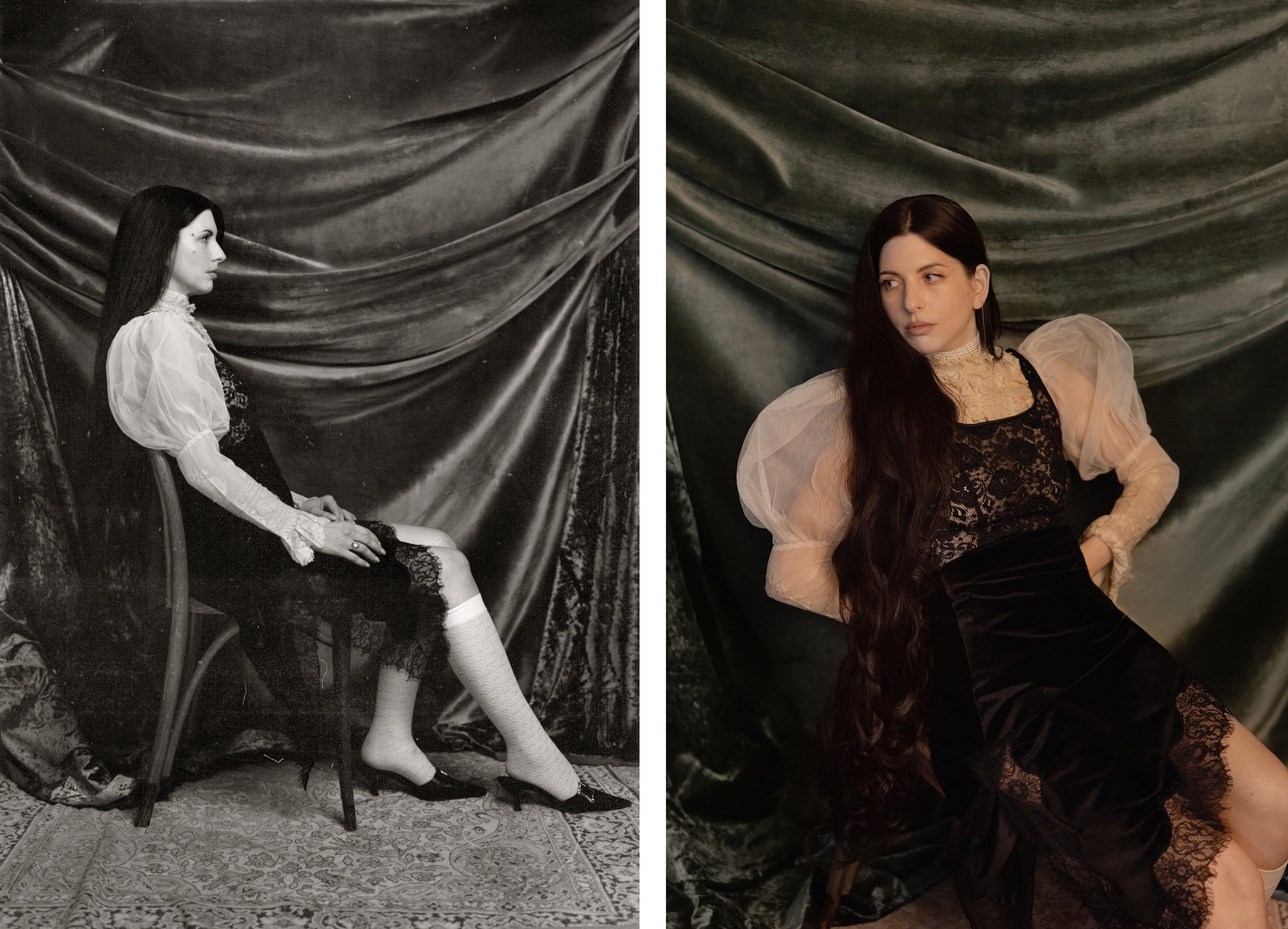
Her fragmented, repetitive compositions are instinctive, the way her poems are set to music follows the logic of classical music rather than the conventional verse–chorus–verse system. Her sonic world draws from the Anglo-Saxon cultural sphere, condensing the gothic rock of the 1970s, the tension of post-punk, the atmosphere of trip-hop, and the emotional excess of film scores into a single language. Among her inspirations, one can recognize Kate Bush’s sensitivity to form, Siouxsie Sioux’s dark theatricality, Dead Can Dance’s ritualistic soundscape, PJ Harvey’s intimacy, and Angelo Badalamenti’s ominous melodicism. As a multidisciplinary artist, her songs reflect the experience of living between worlds, the overlaying of different mythologies and subcultures, and a continuous rethinking of form. Digital and analog tools intertwine in her instrumentation; her vocals are instinctive and deliberately untrained. Sturgeon Moon does not begin from genre definitions, but represents a text-based, freely structured musical approach. Sturgeon Moon is the first public milestone of Viola Wells’ musical path. In the following interview, we spoke about the details behind it.
An interview by Mark Szabo
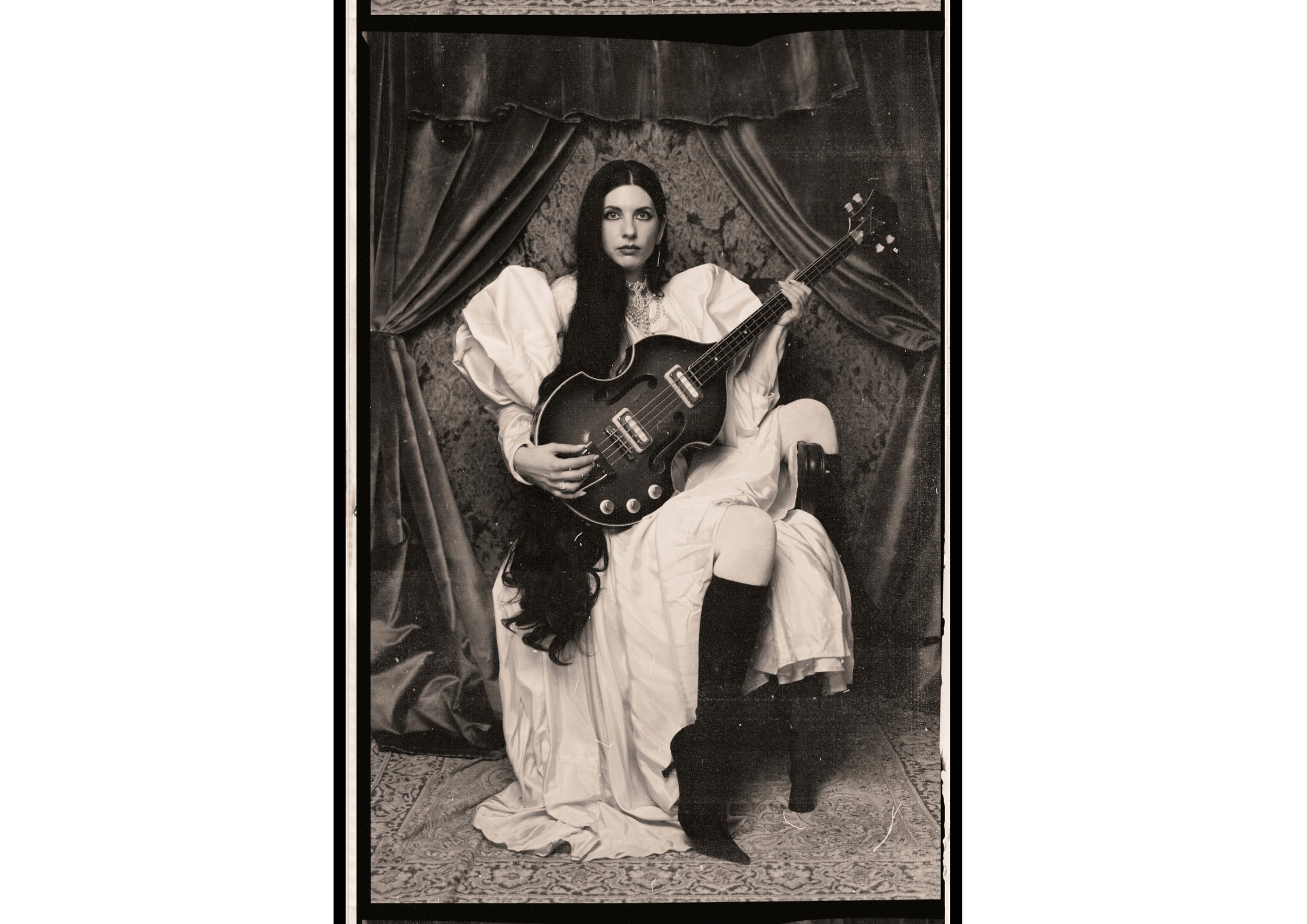
MS: Although you were born and raised in Hungary, your songs are in English. What kind of space does English open up for you that Hungarian does not?
VW: In my adult life, I’ve spoken and read more English than Hungarian, and I think a large part of my brain works that way now. The Hungarian language has infinite artistic potential, but when I start writing, whether poetry or lyrics, English words come to my mind first. I love languages, and I think when you truly learn one, you also adopt a different logic and worldview, kind of like in the film Arrival. There will also be Romani, Middle English, and French lyrics.
Which Hungarian cultural traits appear in your art?
Sorrow. I often think, oh god, I should sing something cheerful too. Musically, I don’t feel much Hungarianness in my work; the British folk world resonated with me more. I use a lot of cimbalom and violin, but that’s part of my Romani heritage.
If I know correctly, you come from the world of perfumes. In music too, just like in fragrances, layers are built on top of each other. When shaping sound, do you think like a perfume—with a top note, a heart, and a base?
Scents play a huge role in my life. But in neither field do I like working within strict frameworks. I’m not a trained musician, nor a master perfumer; songwriting is a Lego-like process for me, I build from an idea, sound by sound. The first thing might be a piano melody or a bassline, then I experiment until it comes together. In both music and perfume, intention is the most important thing. Not perfect harmony or system, but what it wants to say—even if that turns out to be nothing.
What kind of scent would this song be?
An ice-cold, swampy, algae-heavy, dark mossy scent with metallic notes, like the smell of blood. This song came from an ancient place; it’s a bit resentful, born from a more violent corner of my womanhood. This song originally appeared as a poem.
When you were writing the text, did you already hear a possible sound, or did the music come later?
No! When I decided to sit down and make music, I went through my poems and started finding melodies for the texts. I did have to rewrite it a bit in the end, but it’s a good anchor for me to have text first and sound second. When I watched the Elton John film, I was completely blown away by the fact that the lyrics were always there first—Bernie presented them to him, he sat at the piano, and the melodies just burst out of him.
What did you learn about yourself while creating this song that you hadn’t realized through writing poetry alone?
For me it was that so many new emotions can be expressed through sound. One reason I wanted to set my poems to music is that fewer and fewer people read poetry, and I thought maybe it reaches further if they have a voice. It was also new to me that I’m even capable of this. There was so much bottled-up desire and drive in me about making music.
As a journalist, you’ve previously interviewed artists like Fontaines D.C. or Billy Idol. At that time, did you have an idea of what you’d like to read about yourself as a musician? Now that you’re the subject, how does that feel?
I think I’ve been fantasizing about this since I was about nine years old...huge MTV-style interviews were happening in the bathtub between me and my rubber ducks. Jokes aside, I don’t care what I read, as long as music is in the foreground, whether it’s good or bad. As a female songwriter, my fear is that this can get pushed into the background. Right now, I have a very “I came, I saw, I went home” attitude, meaning I really have no grandiose plans, I just create as long as I enjoy it.
There’s a strong cinematic sensitivity in the song. When you write music, are images, spaces, and movement guiding the process more than concrete melodies?
It’s very mixed. Most of the time, the text comes first and I write the music to that. There are tons of visual elements in the poems, so the theme definitely influences the sound, but all of these processes are instinctive, I just do what feels right. I wrote a song about a dream where I was flying on a skyscraper-sized dragon, this one doesn’t have lyrics yet, but it does have a melody.
The vocals are instinctive and experimental. Is this more about a lack of training, or a conscious distance from sterile sound?
Both. My voice is completely untrained it’s not my strength, but for the music I love and make, it doesn’t need to be. In my world, it’s okay if it’s rough, raw, or sometimes off-key. Sterile, perfect, artificial things drive me up the wall, so even if I had the voice of a pop-star, I wouldn’t use it that way.
Was the open form and fragmented structure liberating, or did it keep you in a constant state of uncertainty during creation?
It’s liberating. Chaos doesn’t make me uncomfortable at all. I’ve also written songs that follow a more conventional structure, because that’s what they demanded, but I don’t cling to any recipe.
What is your first memory of music?
I had a very musical upbringing. I grew up on MTV instead of Cartoon Network. My first memory might be when I was three or four years old, screaming Zombie by The Cranberries over and over.
Is this project more of a beginning, or the first manifestation of something that’s been maturing for a long time?
The manifestation of long-maturing material is the beginning itself. The desire, the musicality, the ideas have been there for over 20 years. I just only now reached a mental state where I dared to start.
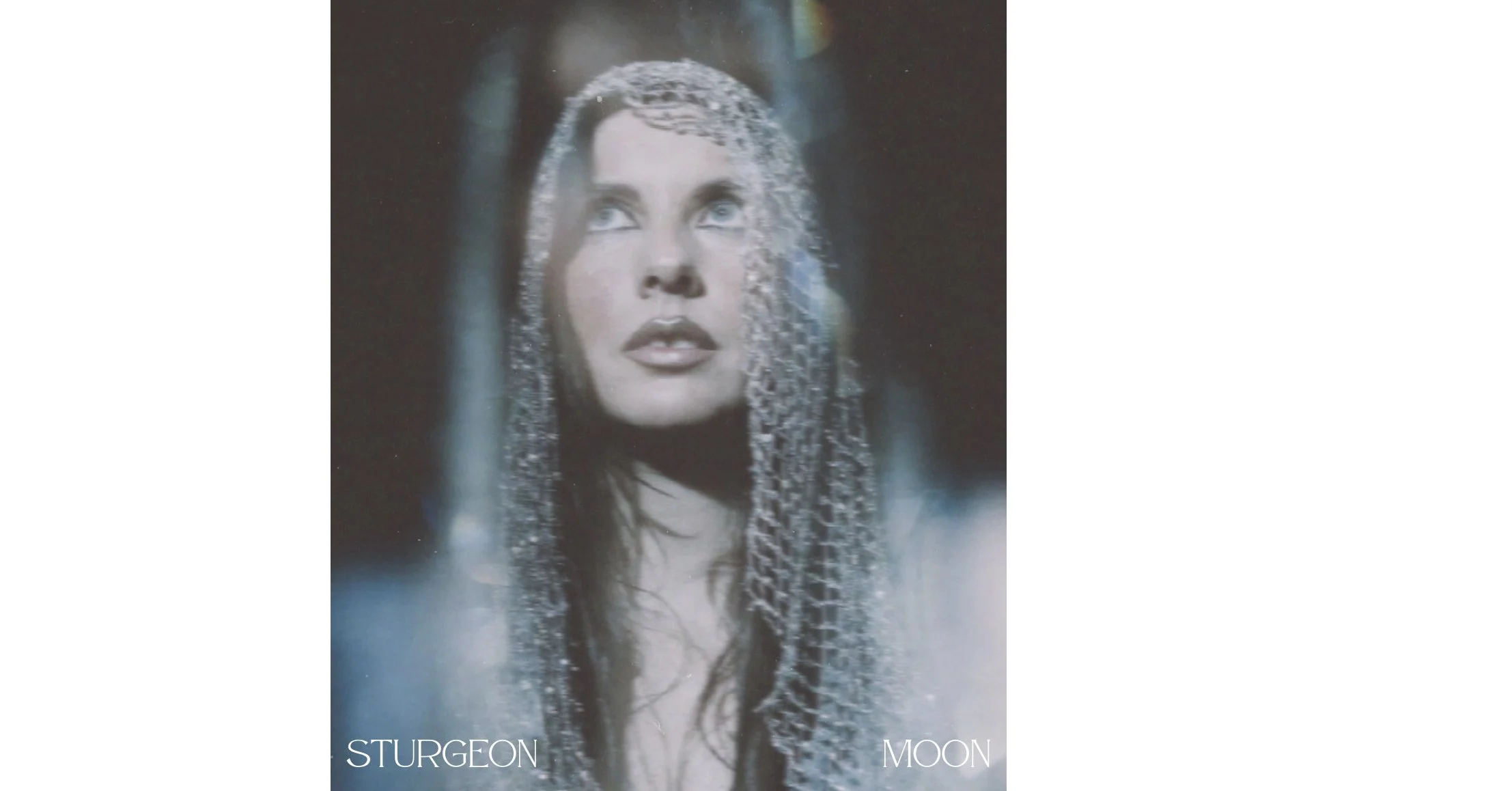
Photography by Wanda Martin
Styled by Dora Mojzes
Make-up by Nanett Kurti
Hair Bence Erdos